
How to Manage Your Personal Brand: Expert Interview with Natalya Michelle (Card #54)
Key takeaways
- Natalya describes personal branding as a story in a world full of storytellers.
- Your own story is what sets you apart in a competitive field.
- A business is often perceived through its leader, so be deliberate about your personal brand.
- Audiences respond to authenticity, while professionalism still matters.
- Know your strengths and weaknesses, and find people who balance them.
This guide goes deeper on card #54, Personal Brand.
 John: Hey guys welcome back to another episode of success cards today we have Natalya Michelle with us speaking about card number 54: personal brand. Natalya, will you tell us a little bit about yourself and before we dive into a deeper look at what personal branding is and how to consider it and how can other people be successful like you in this field?
Natalya: Yeah, so essentially a little bit about my background is I started in traditional film and television, your Netflix, Hollywood, red carpet environment, and it was through the power of personal branding within my own storytelling what I went through as a kid that actually propelled me within traditional film and television but then also, when social media, a form of advertisement, a form of way to elevate your story and form a personal branding came about. When COVID hit, specifically TikTok, Instagram, and the rush an d explosion we saw with reels, that’s what catapulted me as an individual just booking movies, TV shows, working in traditional Hollywood, but then also growing my own company called Indigo Media and being the CEO to that.
John: What is your Instagram handle?
Natalya: It’s @natalya. Natalya is spelled N-a-t-al-y-a, with a y and then Michelle with 2 l’s but there’s an underscore in between.
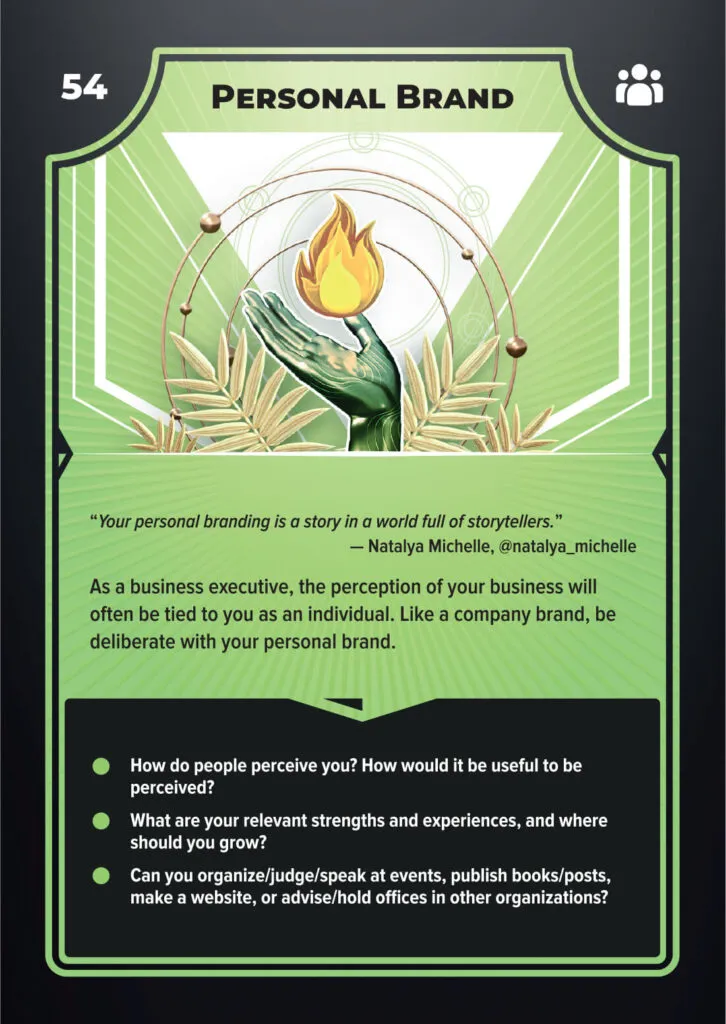
John: So, the quote that you provided is, “your personal branding isi a story in a world full of storytellers.” What do you mean by that? Why is it so important?
Natalya: So, I reference that heavily within my own line of work. There’s so much competition in whatever field you are trying to pursue. But, you as an individual are going to be the one and only thing that you can rely on to be unique and actually help you as you develop and grow into your career of choice. So with that being said, for me what really helped me stand out in film and television, was my own story, my own personal brand. Me honing into the attributes that make me unique is what really propelled me in my own career for film and television, and also just in any job that you are looking at when people are interviewing potential clients or even just potential employees, you’re looking at their attributes as a human being, as a storyteller. And when you’re going into business you want to think about it in the same manner so highlighting the unique attributes of the story about you and your persona is what’s the beautiful part about personal branding and storytelling.
John: That’s really interesting because even the way our brains learn the best is through stories. Like that’s why we enjoy watching stories because we experience life as a story.
Natalya: Exactly and it’s so ingrained in our human psychology where even the most viral social media videos to this day have some kind of story format when we even watch or consume movies, it’s in the same story format or where we just dive in and feel like we’re involved in whatever it is and we can have this escapism or escape kind of feel.
John: So, the card itself says “as a business executive the perception of your business will often be tied to you as an individual. Like a company brand, be deliberate with your personal brand.`` Will you elaborate on this a bit?
Natalya: So, I’ve obviously been talking about multiple examples already but, I’ll throw in an easy one, everybody knows Walt Disney and then Mickey Mouse right? Like the two are so tied together within their branding that you can’t separate the two. It is almost like Elon Musk and Tesla, you know you can’t separate the two. When you have an individual that is the face of a brand or a company that has their own story, people have other reasons to put their own financial assets or spend money on this company because now there’s an emotional tie, which is how we spend money on a day-to-day basis.
John: It is interesting because oftentimes, life isn’t about the things but our relationships to the things. And by humanizing, having archetypes even real people, uh the relationships are kind of interpersonal relationships which is how we evolve to survive on a tribal level.
Natalya: Exactly! And, even just taking this on into other different realms not just film and television or just personal branding within influencing. You have the lingo, a popular language learning app that utilizing the owl in their own social media branding and personal branding to have their own story and even their love interests be associated with the social media account and that’s why they’ve seen a spike in a lot of their traction, whether that is clicks, downloads, etc.
John: Then you’ve got a lot of the big tech companies and almost all of them have very identifiable founders who have very strong personal brand, but for the viewers here, for example if you are a tarot card reader, you might have a specific story that makes your service more valuable or that gives you the right to specialize in something or have some sort of personal connection with an audience that is what’s going to differentiate why would they give you money or give you more money, or choose you over somebody else is because of this personal brand. So let’s get into the nitty-gritty and some tactics about how to apply this and how to work on our personal brands. Getting into the prompts on the cards, how do people perceive you? How would it be useful to be perceived?
Natalya: So, in order to be perceived whether that is through the public or just through your inner personable intimate relationships, it just comes down to the core of you gotta just be you. I think that’s what is the beauty about your personal brand is it’s so uniquely tied to you. You just being you, and we have such a trouble in today’s society just do that. You know obviously carry levels of professionalism and other attributes while working but still carry this level of humanism, so that when you do operate, in our day-to-day lives, you’re human and that’s what we all look for.
John: Yeah, it’s interesting too because, a lot of people think that a lot of like actors or social media influencers are very fake but, it’s actually quite the opposite where if it’s so easy to be fake than more people will do it and more and more I feel like people that really resonate with their audiences or are successful like more frequently are the people who are very authentic to who they are but also being aware of who are you, what values do you represent, what kinds of like archetypes even can you fit under an play into because people tend to categorize or use symbolism. For example, are you like a maiden or a jester, you could actually consciously think of these things and kind of play into them a bit but try to pick them based on who you are as a person and what your business as well um would with which aspects of that would be relevant to your business. The next question here is what are your relevant strengths and experiences and where should you grow?
Natalya: For me, personally, there’s always strength every single person has and weakness, and you can find another human being in order to supplement their weaknesses and their strengths and there is balance that you can have, right? So when looking at life, one of my mentors told me, he was like “look at life as like this chessboard or your business, and you are the king, queen in this operation. So you’re moving through and you have a certain role that you have to play based on your strengths and weaknesses and how you move according to the squares along you know, the chessboard. So, it’s the same with everybody else that’s on your side and on your team and how many chess pieces you have. You want to make sure you have a full set when you’re running your company. Make sure you want to have every set filled whether that’s a lawyer or whether that is a personal manager, an assistant, an accountant, you know a financial advisor, whatever it is you want to have those thoughts filled. If you already know that you’re not the best when it comes to doing your taxes or you’re not the best when it comes to copy text, so, finding somebody else that has those attributes or those strengths in that place, that way you don’t waste your time and money as we reference you know, this chessboard for instance.
John: Wow, that’s a really good point, so diverse if I play to your strengths and you can outsource your weaknesses.
Natalya: Exactly and that doesn’t mean oh if you suck at something, you’re always going to suck at it. You know, you can always improve and grow, it’s just now we’re talking about passion, are you really gonna go and learn a new skill and take the time out of your day to focus on developing a skill to its peak, when you could be focusing on honing in on the skills that you have that have already developed.
John: Something here that is something I’ve been hearing more and more from a lot of like the bigger personalities, is that it’s good to kind of more micromanage your brand at first, before you try to completely outsource it at a certain point you can outsource it, but if you haven’t done your own job curating at the beginning, it’s hard for other people to know your voice or to find something that’ll really resonate with your audience, without you setting that kind of tone or pace first. Last set of questions here is, can you organize, judge or speak at events, publish books or posts, make a website or advise, or hold offices in other organizations? The idea is, how can you be getting out there in front of the audience or building authority or skills?
Natalya: There’s so many ways to just grow and promote your business whether that is just online or in person completely for free. They’re free and also paid avenues too. One of my favorite ones and one of my special skills obviously being social media and anything having to do with social platforms, these days, that is a free platform where you can obviously grow and post your content all about your business and what you do for free and market it. Websites, there’s going to be a fee that you have to pay at least to get the domain name and in order to build and develop if you’re not the best, you’re going to have to hire a website developer but, at the very least you know it is an avenue that you could approach in order to have or at least an asset while you’re doing other avenues and marketing whether that’s through social or whether that’s why are you doing other things that through social whether that’s through which the newspaper that’s through let’s just say, newspaper because we’re going to throw them back in the day, right? You know, there’s so many different avenues of marketing and ways of publicizing yourself, it just depends on the industry type and how your audience moves and operates on a day-to-day and where they’re going to see these ads if they need these services in general. So, not saying like one is better than the other, you know completely because I just you know being honest, I prefer social in everything that I do. But, I can see there being value and traditional avenues of marketing like with newspapers, if you’re trying to hit an older demographic. That still reads, you know, newspapers or if you’re trying to hit, you know truckers in the trucking industry that drive often and that’s how they consume most of their time then you might want to do billboard, you know?
John: Yeah, and you could at least try different things and see what works for you. Um, so part of this card is also about trying to be unorthodox and creative. That’s why it specifically says like, are there things that you could speak at so maybe look for events or if there’s university campuses or maybe you can organize things on Facebook or partner with other people to try and get events where you can give out information for free in exchange for like one boosting your brand but also possible clients and such or even charging tickets or whatever it is really depends on your business and your kind of how your personal brand ties into that but it’s something where you actually want to be like active, building your authority but then to also be able to kind of put that together, almost into your story and kind of creating a resume out of it where a lot of people do give a lot of talks or workshops or things like that but they don’t have like a centralized website like someone I know who’s a very successful professor who is now teaching at Harvard, she had a personal website where she would publish her, all of her papers, and all her speaking events and just really centralized it so that if you ever go there, you’re like oh wow this person’s done a lot but a lot of other people have also done a lot, they just don’t really like centralize or organize it all so it doesn’t come as much together into a piece of story or they don’t seem as like active or experts in the space. Something nice about social is you do have a track record of the things you create and views and such, but there’s also many more layers to life and different kinds of venues that can be snooped up. Uh, so Natalya, that concludes the card, are there any other considerations around personal branding that you think are important or any pieces of advice or strategy?
Natalya: Yeah, so I guess with personal branding, and going into it, if you don’t want to be the face of your own company, it doesn’t mean that you have to be. That is one conversation I have with multiple clients of my own when they’re talking about marketing avenues like doing UGC content on social media. So for example, they have let’s just say a water business, and they’re like a have a water business, I need to create content for social media but I don’t want to be the face of the brand, you can still use an animated mascot or you can hire talent or actors there are so many different avenues on how you can still put yourself out there so I’ll leave it at that.
John: And I know through your company, Indigo Media, you also do a lot of these social media management services, that’s right?
Natalya: Correct and then we also do events as well too and I know you brought up events in managing and that is one of the tiers that you might want to outsource somebody because events is very difficult to run and manage because you’re dealing with multiple people and obviously multiple different ages, demographics, polls, you need multiple hands in order to run and operate. So, yeah, we do social media marketing and as well traditional film and television just media plus events.
John: and remember your strategy can always change so maybe you start as the central figure for the personal brand for example, in my company, GameTree I was the one on the videos because I started in Ukraine and I was just the one who had fluent English and could just make the videos um, but the longer term strategy, ideally I would be a bottleneck or we find somebody much more articulate and charming than me to do that stuff but it can change over time so don’t try not to lock into anything and k****eep a flexible mind about these things. Natalya, thank you so much for your expert guidance on this stuff um and for being on the show.
Natalya: Well, thank you for having me, I appreciate it.