Think about what is on your mind in your business, then draw a card. Each one gives you an expert quote, practical advice, and questions to help you find your next move.
Card 24 of 101
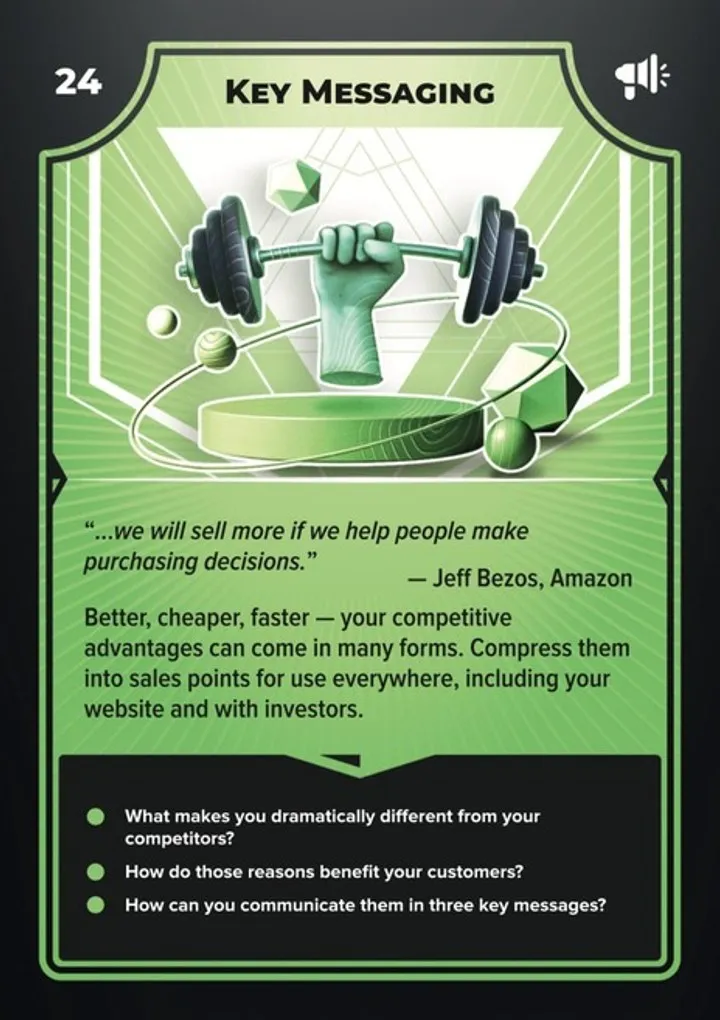
Key Messaging
“...we will sell more if we help people make purchasing decisions.”Jeff Bezos, Amazon
Better, cheaper, faster: your competitive advantages can come in many forms. Compress them into sales points for use everywhere, including your website and with investors.
Ask yourself
What makes you dramatically different from your competitors?
How do those reasons benefit your customers?
How can you communicate them in three key messages?
Card 34 of 101
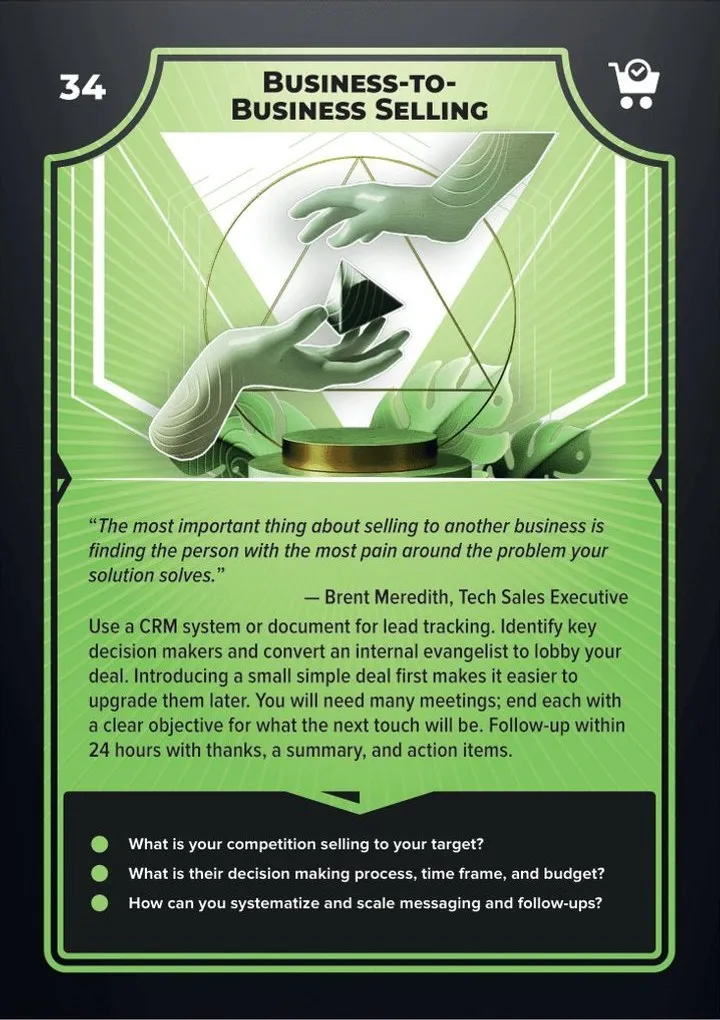
Business-to-Business Selling
“The most important thing about selling to another business is finding the person with the most pain around the problem your solution solves.”Brent Meredith, Tech Sales Executive
Use a CRM system or document for lead tracking. Identify key decision makers and convert an internal evangelist to lobby your deal. Introducing a small simple deal first makes it easier to upgrade them later. You will need many meetings; end each with a clear objective for what the next touch will be. Follow-up within 24 hours with thanks, a summary, and action items.
Ask yourself
What is your competition selling to your target?
What is their decision making process, time frame, and budget?
How can you systematize and scale messaging and follow-ups?
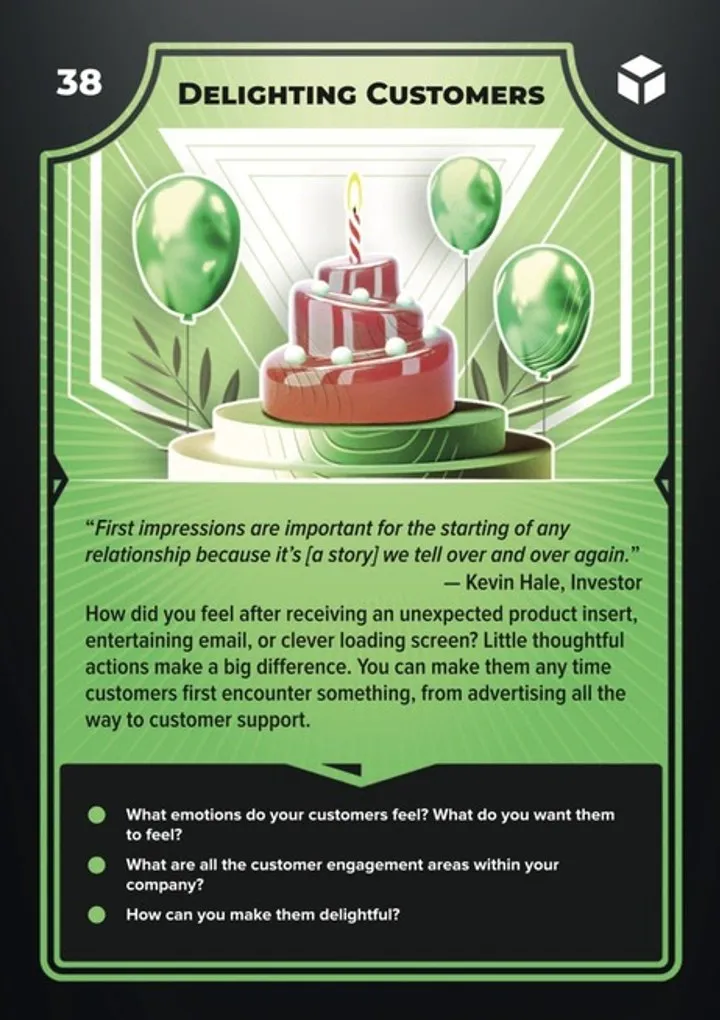
“First impressions are important for the starting of any relationship because it’s [a story] we tell over and over again.”Kevin Hale, Investor
How did you feel after receiving an unexpected product insert, entertaining email, or clever loading screen? Little thoughtful actions make a big difference. You can make them any time customers first encounter something, from advertising all the way to customer support.
Ask yourself
What emotions do your customers feel? What do you want them to feel?
What are all the customer engagement areas within your company?
How can you make them delightful?
Card 54 of 101
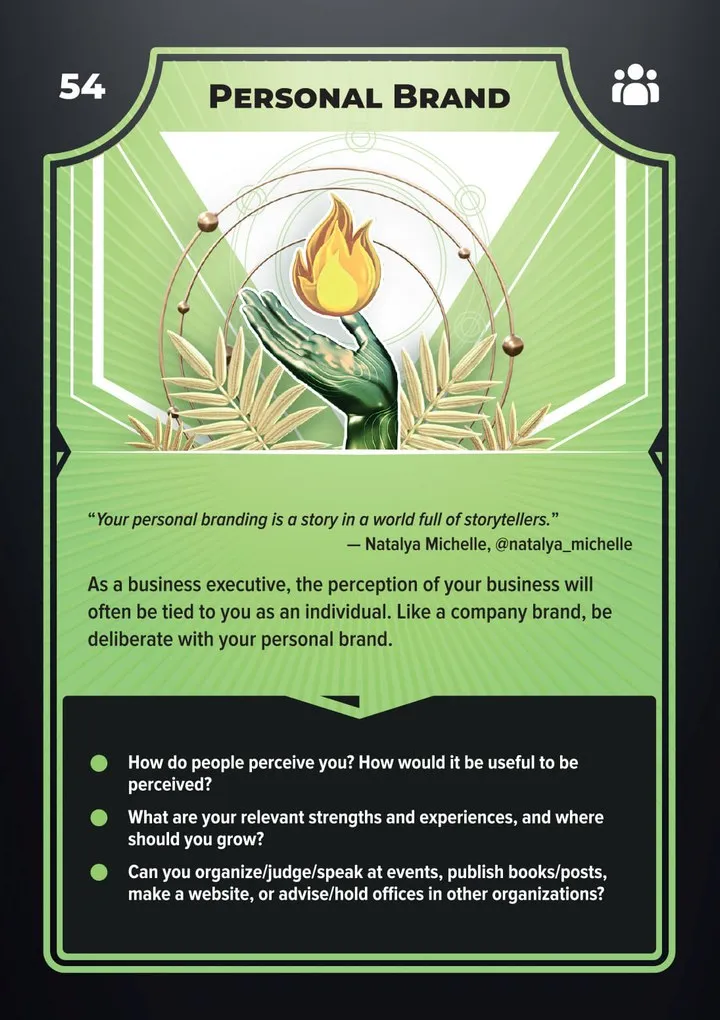
Personal Brand
“Your personal branding is a story in a world full of storytellers.”Natalya Michelle
As a business executive, the perception of your business will often be tied to you as an individual. Like a company brand, be deliberate with your personal brand.
Ask yourself
How do people perceive you? How would it be useful to be perceived?
What are your relevant strengths and experiences, and where should you grow?
Can you organize/judge/speak at events, publish books/posts, make a website, or advise/hold offices in other organizations?
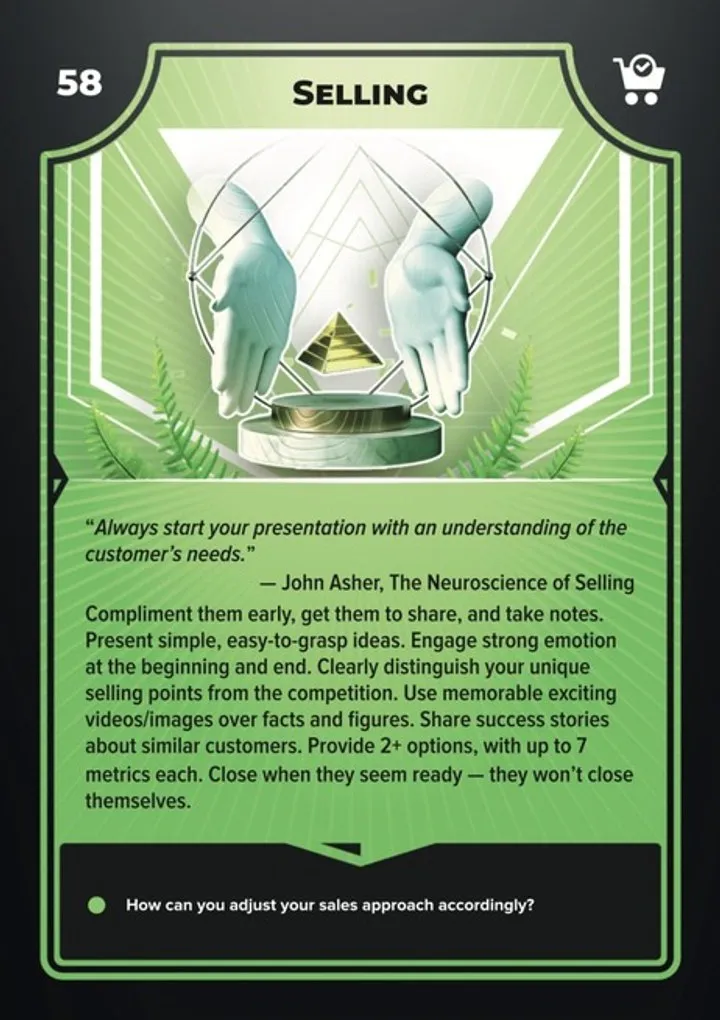
“Always start your presentation with an understanding of the customer’s needs.”John Asher, The Neuroscience of Selling
Compliment them early, get them to share, and take notes. Present simple, easy-to-grasp ideas. Engage strong emotion at the beginning and end. Clearly distinguish your unique selling points from the competition. Use memorable exciting videos/images over facts and figures. Share success stories about similar customers. Provide 2+ options, with up to 7 metrics each. Close when they seem ready; they won’t close themselves.
Ask yourself
How can you adjust your sales approach accordingly?
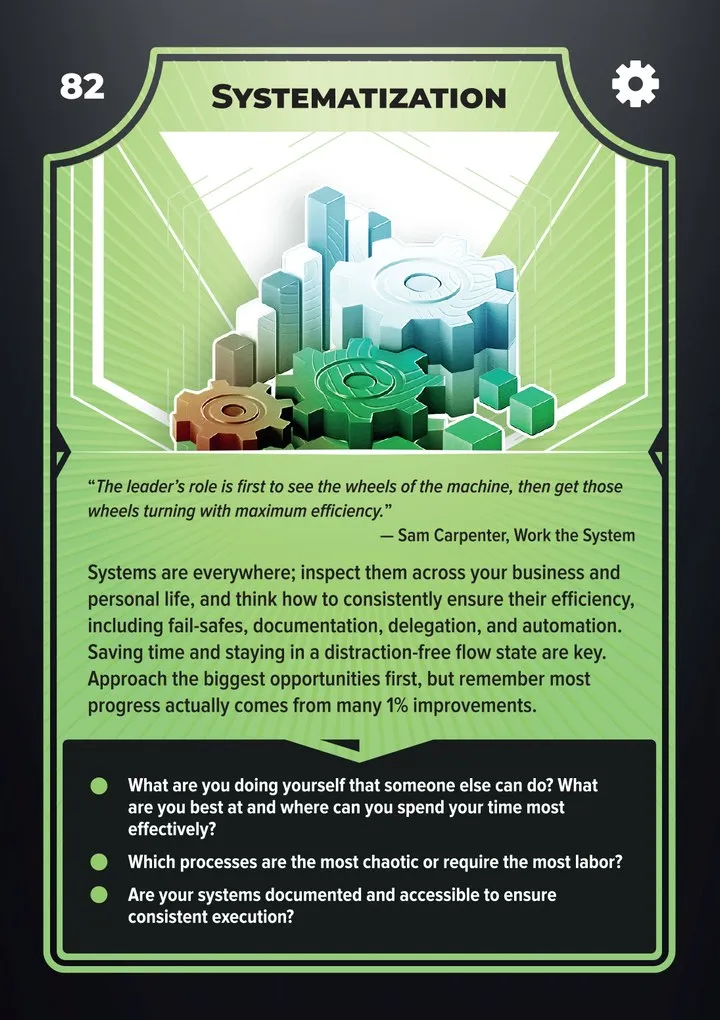
Card 82 of 101
Systematization
“The leader’s role is first to see the wheels of the machine, then get those wheels turning with maximum efficiency.”Sam Carpenter, Work the System
Systems are everywhere; inspect them across your business and personal life, and think how to consistently ensure their efficiency, including fail-safes, documentation, delegation, and automation. Saving time and staying in a distraction-free flow state are key. Approach the biggest opportunities first, but remember most progress actually comes from many 1% improvements.
Ask yourself
What are you doing yourself that someone else can do? What are you best at and where can you spend your time most effectively?
Which processes are the most chaotic or require the most labor?
Are your systems documented and accessible to ensure consistent execution?
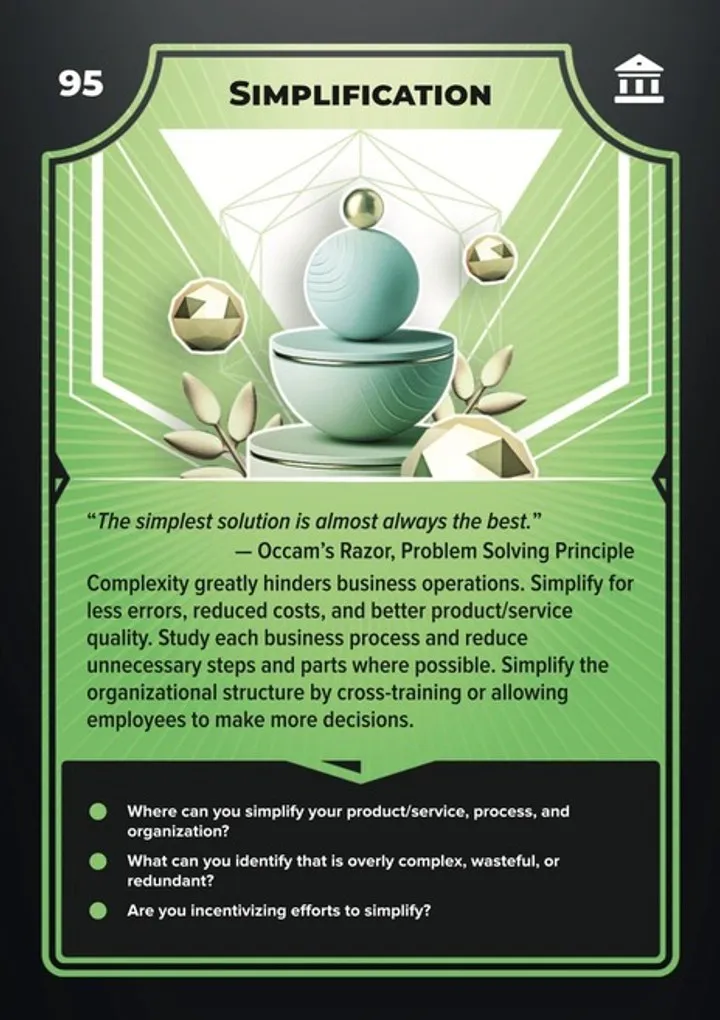
“The simplest solution is almost always the best.”Occam’s Razor, Problem Solving Principle
Complexity greatly hinders business operations. Simplify for less errors, reduced costs, and better product/service quality. Study each business process and reduce unnecessary steps and parts where possible. Simplify the organizational structure by cross-training or allowing employees to make more decisions.
Ask yourself
Where can you simplify your product/service, process, and organization?
What can you identify that is overly complex, wasteful, or redundant?